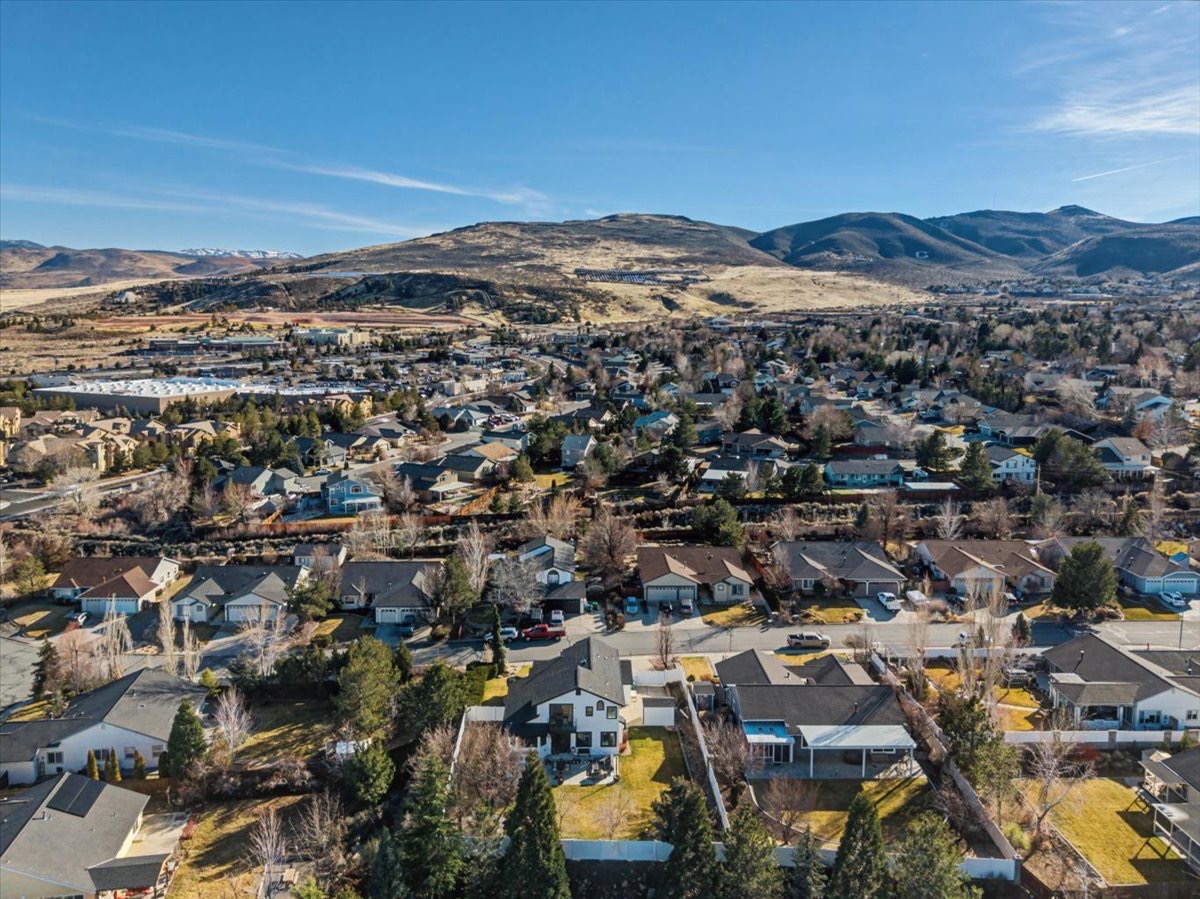
Buying a home
How I Help You Buy a Home in Reno & Washoe County
How buying a home actually works in Reno and Washoe County, from your buyer consultation through closing, and what makes a buyer ready to win.
Overview: The buyer who gets the good house is rarely the one who saw it first
Most agents start by showing you houses. I would rather start by getting you ready to win one, because in a competitive Reno market, the buyer who gets the good house is almost never the one who happened to see it first. It is the one who was already prepared to move the moment it appeared.
I have represented buyers across Reno, Sparks, and Washoe County since 2014, including out-of-state buyers relocating for a job, a lifestyle change, or Nevada's tax advantages, and local buyers moving up, downsizing, or buying their first home. The process below is the same one I run for a $400,000 first home and a $2 million relocation purchase. What changes is the pace and the specifics, not the structure.
I run this as R.E.A.L.: Ready, Educated, Aligned, Locked. Ready means you're pre-approved and represented before touring anything. Educated means you understand what your money actually buys here before you fall for something out of range. Aligned means I build the search around your real criteria, not a wish list nobody can afford. Locked means the offer, inspection, financing, and closing are handled so the ending is the boring part, exactly how it should be.
This matters most in a market where good homes do not sit. A well-priced home in a neighborhood buyers actually want, Southwest Reno, Caughlin Ranch, Somersett, and similar areas, routinely draws more than one serious buyer in the first week. The buyers who win those homes are not the ones who saw it first by luck. They are the ones who had already done the first two steps below before that home ever came on the market, so there was nothing left to figure out except whether it was the right one.
One note on how this works in Nevada specifically, since it varies significantly by state: this is an escrow and title state, not an attorney-closing state. That shapes several of the steps below, and I will walk you through exactly what that means at each one.
I also want to be direct about something most agents gloss over: buying a home is a legal transaction with real money and real deadlines, not a weekend of open houses. Rushing into a showing without financing sorted, or writing an offer without understanding what you are agreeing to, is how buyers end up either losing a home they wanted or winning one they should not have bought. Every step below exists to prevent one of those two outcomes.
Let’s talk
Ready to take the next step?
Ready: Pre-approved and represented before you tour anything
Before I show you a single home, two things need to happen. First, a real conversation with a lender, not just a pre-qualification guess, so you know what you can actually afford and what your monthly payment looks like at different price points. I can introduce you to lenders I trust if you do not already have one.
Second, you will sign a buyer-broker agreement with me. This is standard practice in Nevada now, and it is a good thing for you, not a formality to get past: it means I am legally representing your interests in the negotiation, not just showing you houses while representing the seller behind the scenes. I will talk you through exactly what it covers and how I am compensated before you sign anything, so there are no surprises later, and I will answer any question you have about it as many times as you need.
I bring this up early on purpose. A lot of buyers have heard vague things about changes to how buyer representation works and are not sure what it means for them. The honest answer is that it protects you: without it, an agent showing you homes may legally represent the seller's interests, not yours, even while being friendly and helpful. Signing with me means someone is actually working for you in the negotiation, not just facilitating a showing.
Being "ready" before touring homes is not about slowing you down. It is about making sure that when the right home appears, and in this market the right ones move fast, you can act immediately instead of scrambling to get pre-approved while someone else writes an offer.
For buyers relocating to Nevada, being ready also means understanding the practical side of the move itself: how financing works if you are still selling a home in another state, what documentation an out-of-state lender will need, and how tight a timeline is realistic if a job start date is driving the schedule. I have walked enough relocating buyers through this to know where the friction usually shows up, and I would rather flag it in week one than have it surface as a problem during a 30-day escrow.
How I Help You Buy a Home in Reno & Washoe County
Educated: What your money actually buys here
Every market has a gap between what buyers expect their budget to get them and what it actually gets them, and that gap causes more wasted showings than anything else. Before you and I look at homes, I will walk you through current pricing by neighborhood, honestly, including the neighborhoods that are out of range at your budget and the ones that are realistic. It is a better conversation to have once, up front, than to have it slowly across fifteen disappointing showings.
This is also where I explain the Nevada-specific mechanics you will run into during the transaction, so none of it is a surprise mid-negotiation: earnest money here typically runs about 1 percent of the purchase price, and it is held by the title company, not by me or the seller's agent. The window to inspect the home and negotiate repairs or credits is called the inspection contingency, and I will tell you exactly how many days you have to work with once you are under contract on a specific home, since it can vary deal to deal.
The goal of this step is simple: by the time you walk into a showing, you already understand what you are looking at and why it is priced the way it is, instead of learning the market in real time while trying to also decide whether to make an offer.
This is also where I am honest about tradeoffs specific to this market: a home in Southwest Reno or Newlands will cost more per square foot than a comparable home further out, and that premium buys walkability, mature landscaping, and a shorter commute, not necessarily more house. A newer build in Somersett or Sterling Ranch buys modern systems and lower near-term maintenance, at the cost of the character an older neighborhood has. Neither is the right answer for every buyer. Knowing which tradeoff you are actually willing to make is what turns a long list of maybes into a short list of real contenders.
Aligned: Fewer homes, and better ones
Once you are ready and educated, I build the search around your real criteria, the ones that actually matter to how you will live in the home, not a generic wish list. Fewer showings of homes that genuinely fit beats a long list of homes that mostly do not. For every home you tour, you get an honest verdict from me, including the homes I would tell you to walk away from, even if you like them, if I see something that should give you pause.
For buyers relocating from out of state, this step usually takes more time and more explaining: which neighborhoods fit which lifestyle, how commute patterns actually work here, what a given price point buys in Southwest Reno versus Sparks versus Incline Village. I grew up on Lake Tahoe's East Shore and have lived in Southwest Reno since 2013, so this part of the conversation comes from knowing the area, not from reciting listing descriptions.
By the end of this step, when you find the right home, you will already know it is right, because the search was built around what actually matters to you instead of touring everything on the market and hoping something clicks.
I also give you an honest read on competition before you write an offer, not after. If a home is priced right and well presented, in this market it is very likely other buyers are looking at it too. Knowing that going in changes how you structure an offer. Finding it out after you have already lost the home to a stronger offer does not help you at all.
Locked: Offer, inspection, financing, and closing, run so the ending is boring
When you find the home, I build the offer strategy around what actually wins in that specific situation, whether that means price, terms, timeline, or all three. Once you are under contract, the inspection contingency period starts, and I coordinate the inspection and walk you through exactly what is negotiable and what typically is not, so you know your real options rather than guessing.
From there I coordinate directly with your lender and the title company through closing. Because Nevada is an escrow and title state, there is no attorney closing table here, the title company handles the closing process, and I stay involved the entire way so nothing falls through a gap between your lender, the title company, and the seller's side.
The goal by the end is for closing day itself to be uneventful: paperwork, a walkthrough, keys. All the actual work happened in the weeks before, which is exactly how it should go.
If something does come up during the inspection contingency, and something usually does, even a small item, I will lay out your real options rather than a single recommendation: ask for a credit, ask for the repair directly, renegotiate price, or walk away if it is serious enough. Every one of those has a real tradeoff against your timeline and your leverage in the deal, and you should decide with the full picture in front of you, not just my opinion of what you should do.
This describes my general process for buyers in Reno and Washoe County and is not legal, tax, or lending advice. Your specific transaction may vary, and I will walk you through anything that is different about your situation along the way.
Frequently Asked Questions
Do I have to sign anything before you start showing me homes?
Yes, a buyer-broker agreement, which is standard practice in Nevada. It means I am representing your interests directly in the negotiation rather than just showing you homes. I will go through exactly what it covers before you sign.
How much earnest money will I need, and who holds it?
Typically about 1 percent of the purchase price, held by the title company rather than by either agent. The exact amount is negotiated as part of your specific offer.
What's the inspection window called here, and how long do I have?
It's called the inspection contingency. The length is negotiated as part of the offer and varies deal to deal, and I will tell you exactly how many days you have once you're under contract on a specific home.
Keep exploring
Ready to make your move with Shannon Comstock?